A plush factory in Shenzhen, not a trading desk
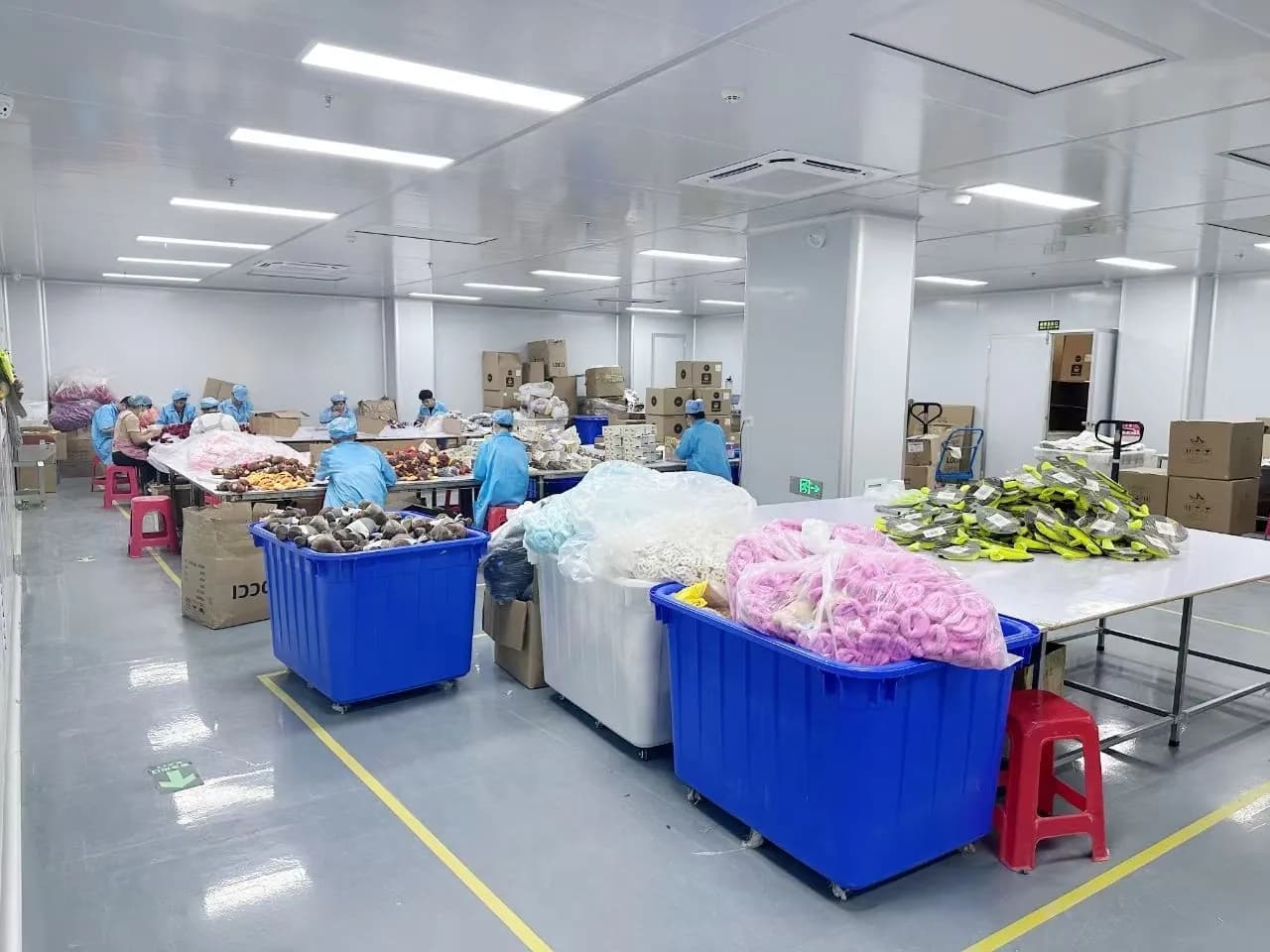
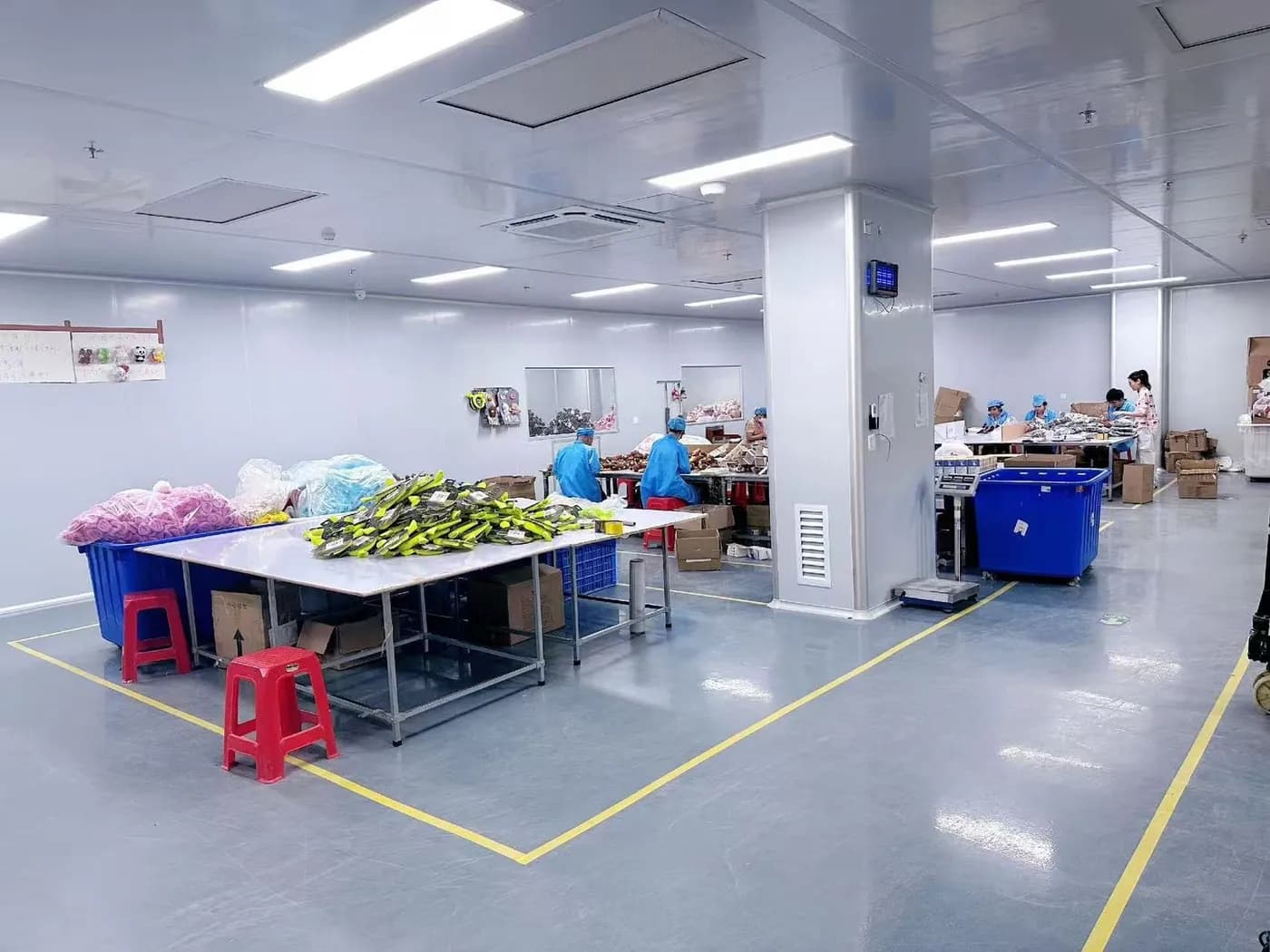
We have been making soft toys to other people’s drawings since 2013, from one building in Shenzhen, Guangdong. Everything from the first pattern to the sealed export carton happens here. It is an unfashionable way to run a plush business, and it is the reason our repeat rate is what it is.
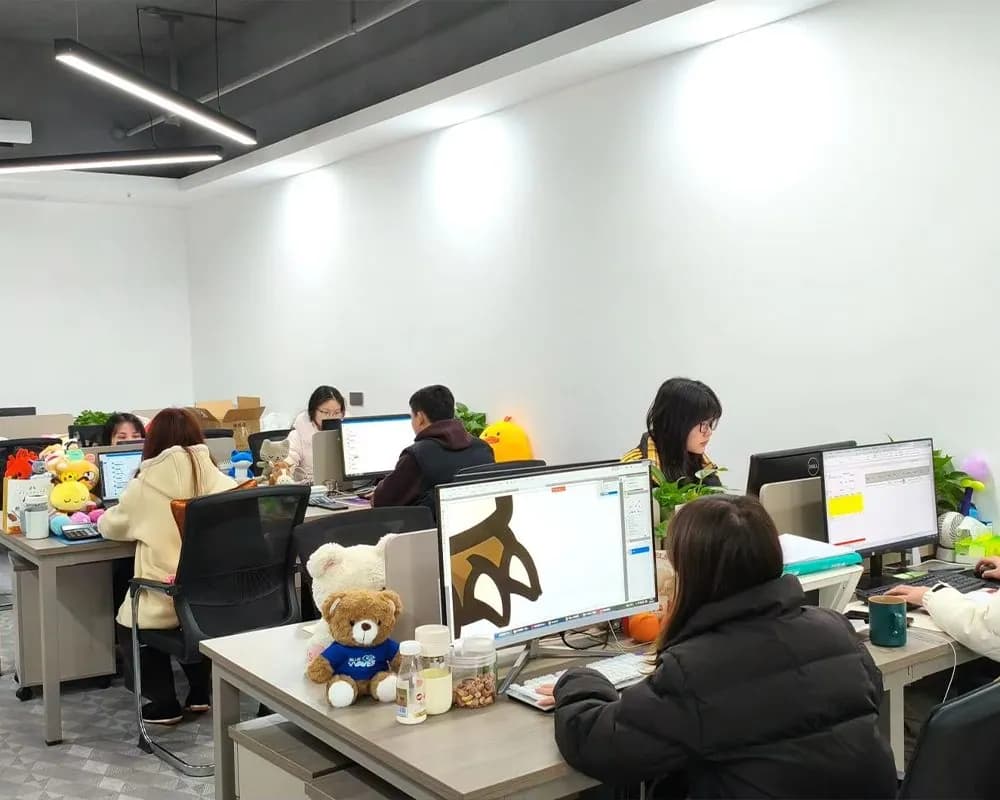
The factory started as a pattern room: two people who could look at a character sheet and know where the seams had to fall, working for factories that could sew but could not draft. That is still the part of the business everything else is built around. A plush toy is won or lost in the pattern, and every stage after it is only protecting that decision.
Sewing came next, then embroidery, then cutting, then in-house inspection and packing — added in that order over about a decade, because each was the stage most likely to go wrong when somebody else was doing it. Today a design that arrives as a phone photograph on Monday can be a physical sample in a courier bag the following week without leaving the building.
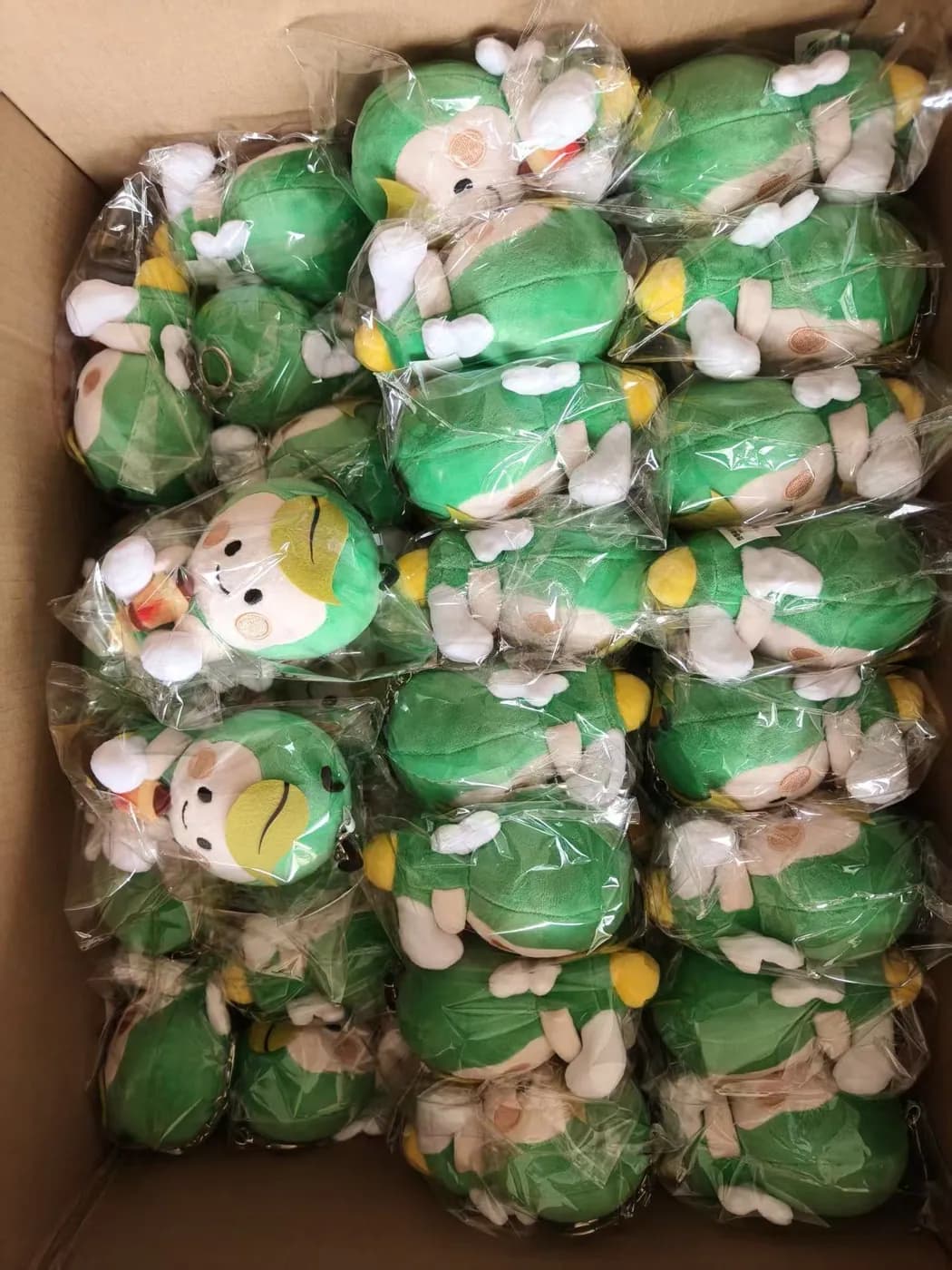
What we do not do is hold stock or sell characters of our own. Every toy in the gallery belongs to the customer who commissioned it. That is a deliberate limit: we are never competing with the brands we manufacture for, and the answer to "can you make this?" is a pattern question rather than a catalogue one.
The factory in numbers
- Founded
- 2013
- Location
- Shenzhen, Guangdong, China
- Minimum order
- 100 pieces per design
- Sample lead time
- 7–10 days
- Bulk lead time
- 25–35 days
- Monthly capacity
- 300,000+ pieces
- Pattern makers
- Two, full time
- Quote languages
- Eight
Where our work ships
- United States and Canada
- United Kingdom and Ireland
- Germany, France, Spain, Italy and the Netherlands
- Portugal and Brazil
- Japan and South Korea
- Saudi Arabia, the UAE and the wider Gulf
- Australia and New Zealand
- Mexico, Chile and Colombia
What sits under one roof
Pattern room
Two full-time pattern makers and a digitiser. Character sheets in, graded flat panels out, with the seam placement argued over before anything is cut.
Embroidery hall
Multi-head machines running flat and 3D embroidery, plus appliqué and heat transfer for the marks embroidery would crowd.
Cutting and sewing
Die cutting for volume and laser cutting for short runs and complex panels, feeding sewing lines that can be split across several designs at once.
Finishing and packing
Stuffing, closing, trimming, brushing, needle detection, inspection, labelling and export packing — with a sample of every design kept on the showroom shelf.
Keep reading
Show us the drawing. We will put a price on it.
A rough sketch photographed on a phone is enough to begin. Tell us the finished height and roughly how many you need, and a costed quotation comes back within 12 working hours.